01
Every verdict is derivable
The right grade is computed from the card in front of you, never rolled. If you were wrong, you can go back and see why.
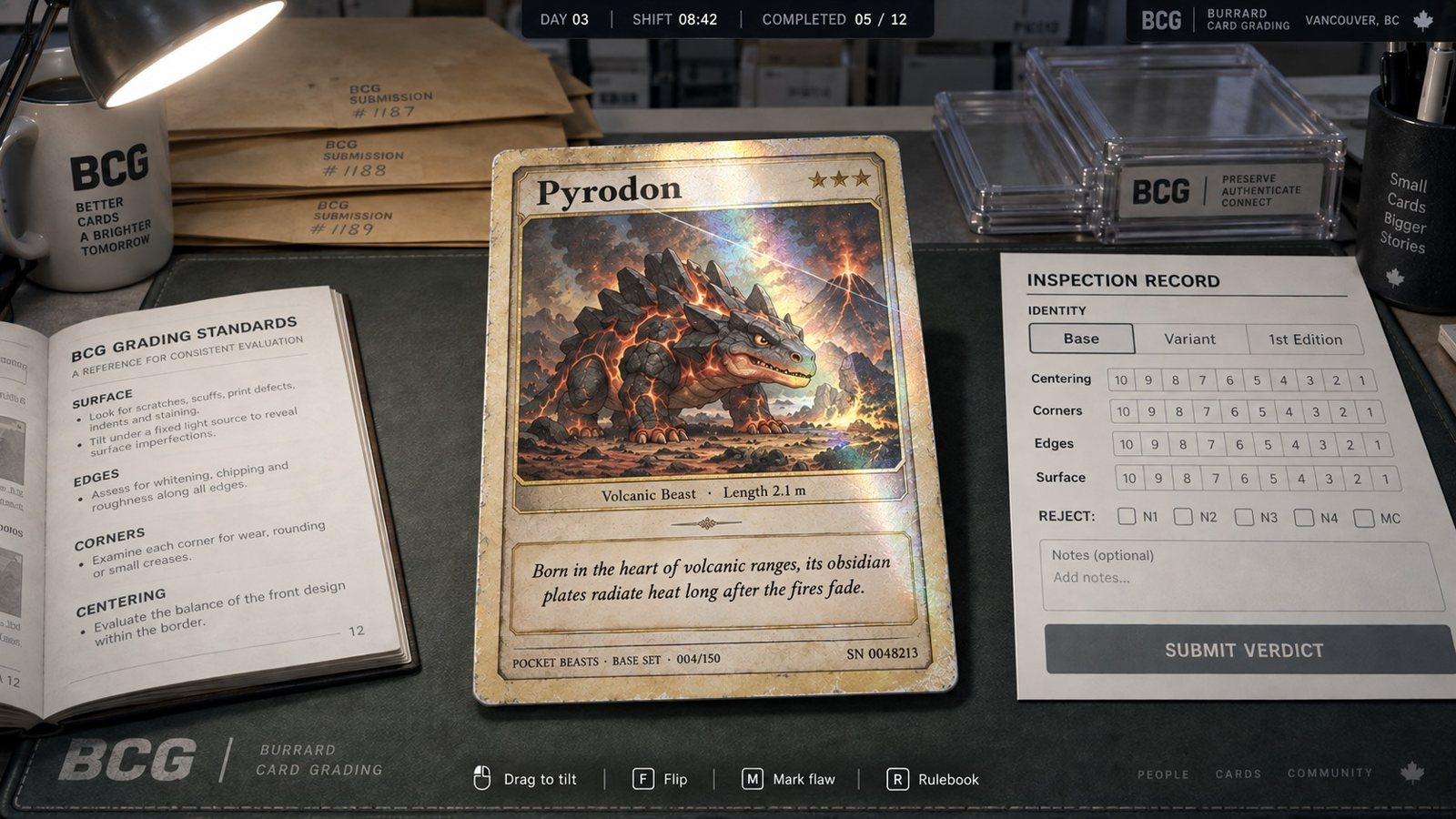
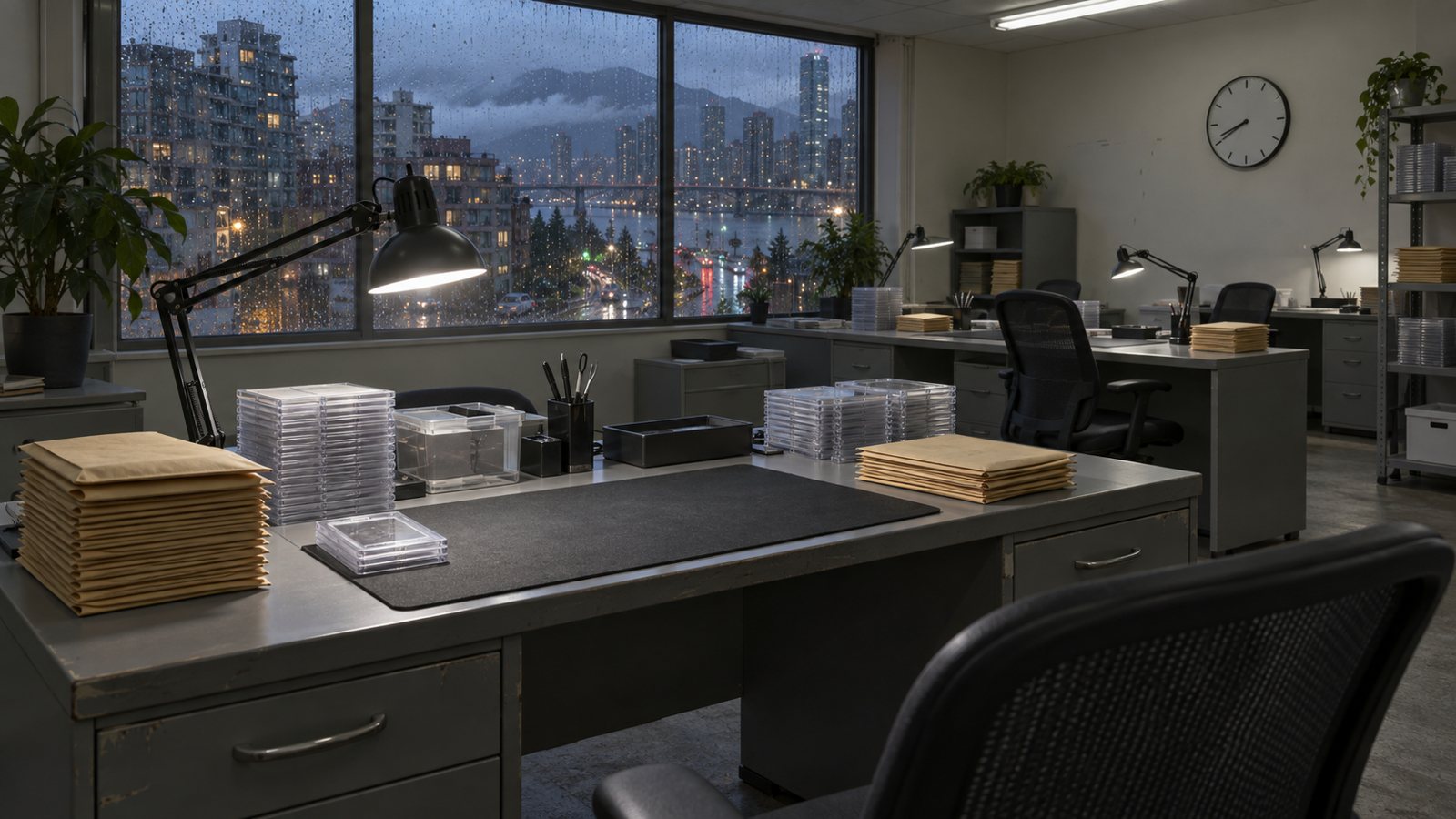
A trading-card grading house in Vancouver. Thirty days. Every card comes across your desk, and you tilt it under the lamp to find what it has survived — hairline scratches, pressure dents, print lines — visible only at the angle that catches them.
You decide what the card is and what it is worth: a 1–10 grade, or no grade at all. Under quota. While the company bills the customer more when your number goes higher.
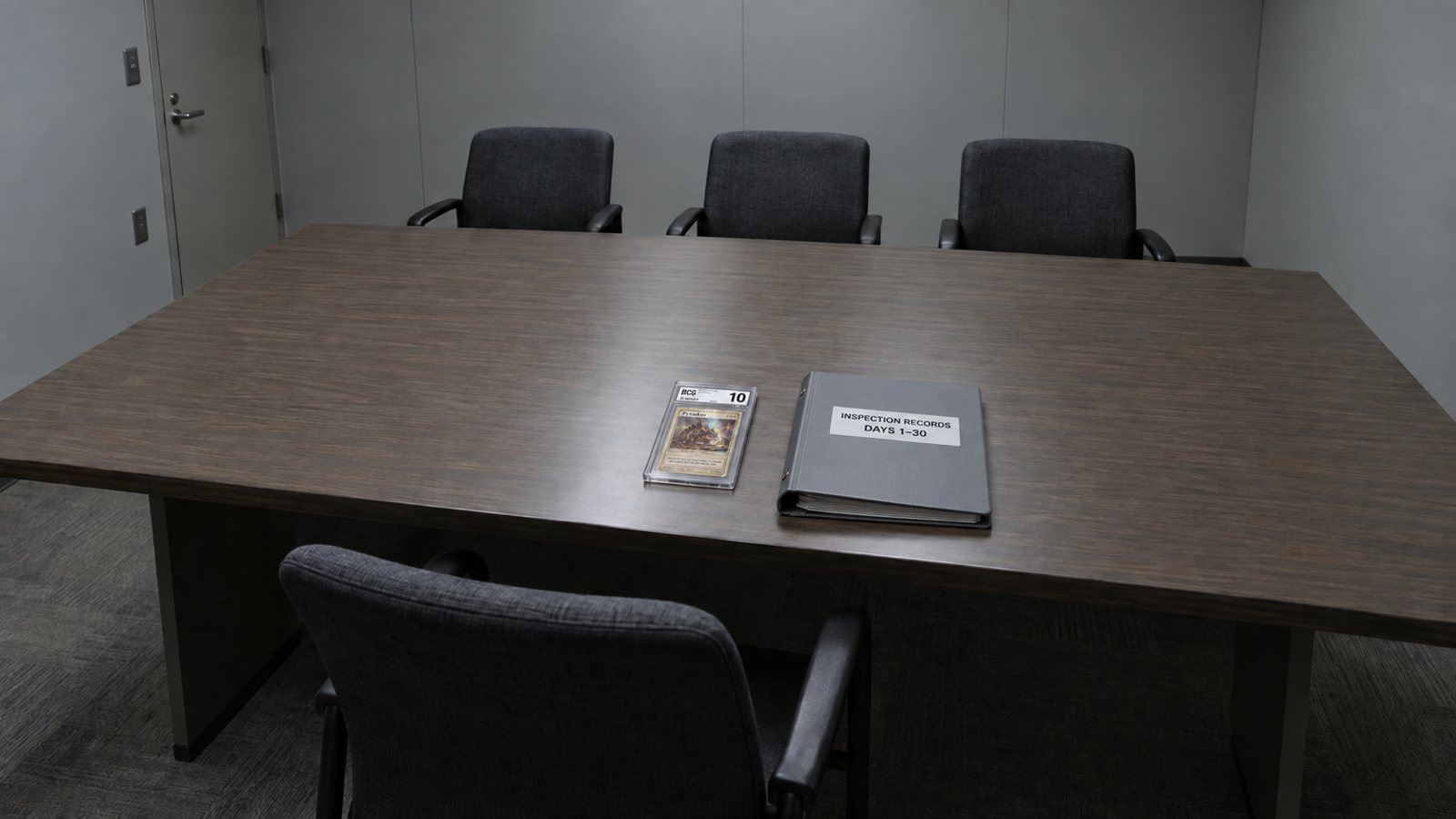
On Day 9 the second grader who taught you the job starts changing your grades. On Day 30 a card you refused to grade turns up sealed with a 10 and your name on the file. The last day is your hearing, not your shift.
The right grade is computed from the card in front of you, never rolled. If you were wrong, you can go back and see why.
Flaws live on the surface, not in a menu. A real light, a real angle, and a hand that learns where to look.
Two ledgers of every verdict — yours and the company's. The day they start to disagree is the day the story begins.
Original, systems-driven games in which the player's judgment is the mechanic, and the consequences of that judgment are recorded and, eventually, read back to them.
SLABBED is our first title. It is design-complete and prototype-validated, with a vertical slice in production for December 2026 and a public demo planned for 2027.
Simulation developer at BCIT since 2021, leading the design and Unity build of the institute's training simulations — a web and VR pair launched in 2025. Earlier, engineering lead on a multiplayer Roblox title. BSc Game Programming, LaSalle College Vancouver; MSc Cybersecurity, NYIT Vancouver.
CPA (Canada & US). Operations, finance and reporting. Formerly COO of a New York financial-district firm.